Showing posts with label Wilson's Petrel. Show all posts

Thursday, 7 December 2023

Seawatching highlights during 2023

 SEAWATCHING in Cornwall is my main interest in birding, mainly because the county lends itself perfectly to an incredible passage of seabirds and a its also a brilliant opportunity to find your own birds.

This summer and autumn has been exceptional and arguably better than 2022.  The following is a synopsis of around 250 hours pure seawatching from two prime sites in West Cornwall: Pendeen and Porthgwarra.

Summary: there are many highlights but the following are the best and worthy of mention:

Fea's Petrel: two sightings, 30th July at Porthgwarra and then a personal find of one at Pendeen on 25th August.  The latter was extra special because it was my first from Pendeen.  Fea's are super rare here and very few birders have even seen one from Pendeen.

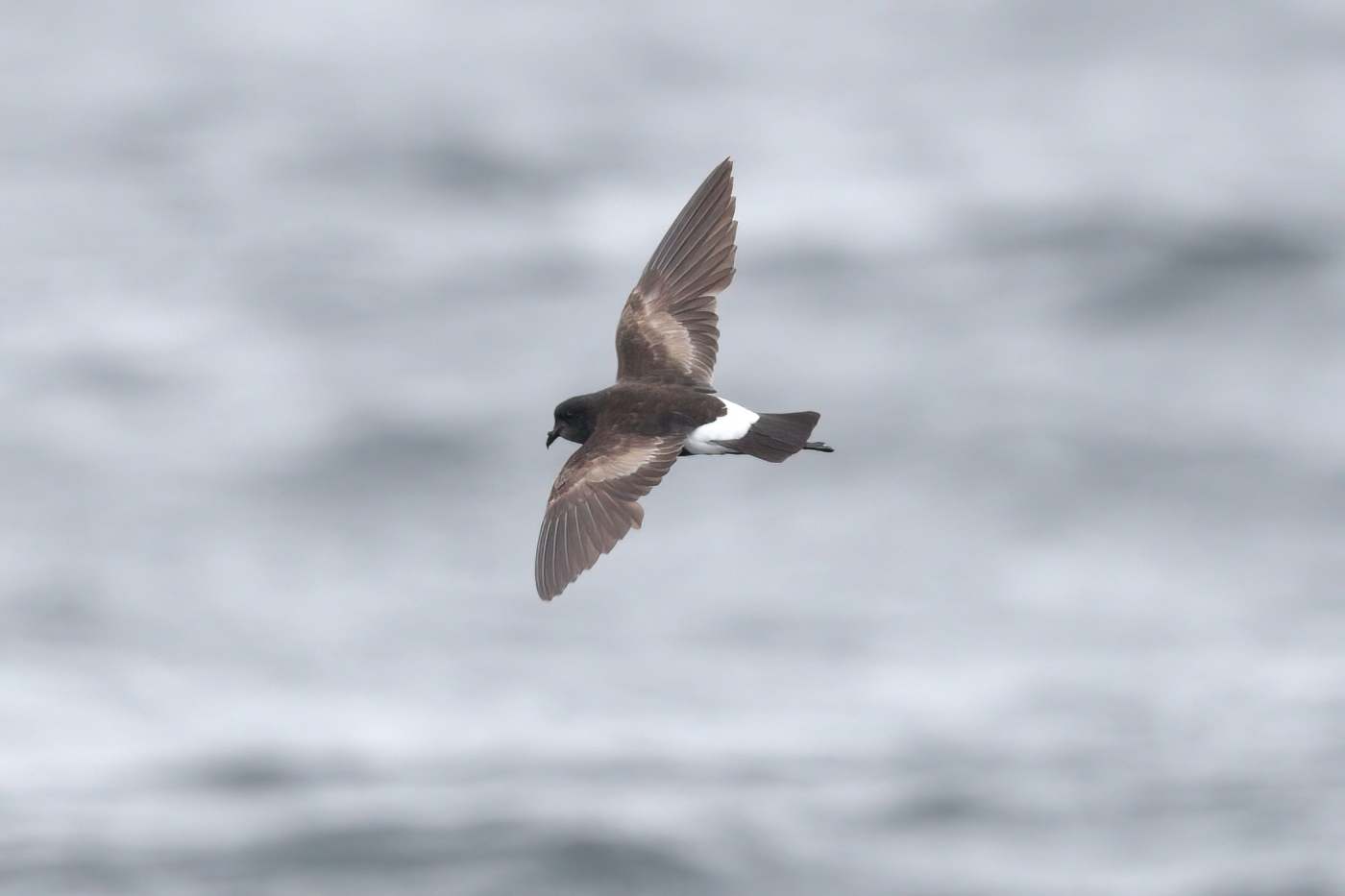
Wilson's Petrel: 25 seen in a five week period including at least six personal finds.

Sabine's Gull: 34 seen with a personal recent best of 16 in one day but also finding a flock of 11 adults together at Pendeen.

Common Scoter: hardly a major rarity but we set a county record of 1115 in one day at Pendeen.

Scopoli's Shearwater: two very good candidates for this species which saw an unprecedented influx in to Cornish waters, including the county first at Porthgwarra 8th July, (subject to acceptance) and another off Pendeen.

Cory's Shearwater: witness to the Cornwall high record count of 6500 birds off Porthgwarra, 30th July.

Sooty Shearwater: a personal highlight with Paul Marshall in counting Cornwall's highest ever day count of 705 birds. 

Pomarine Skua: a good year with 46 birds recorded but one stand out highlight was finding a flock of six off Pendeen in August.

Species accounts:

Great Shearwater: seen on 38 occasions with the first sighting on 23rd June at Porthgwarra and the last on 20th November at Pendeen.  The majority were seen in a six week period from mid Aug to end of Sept.  A personal high total of 1794 was counted on 31st August at Porthgwarra. A second high count of 414 passed Pendeen on 25th Aug.  Even higher counts were noted from Falmouth Bay and Lizard watchpoints.  This species  was one of the ever-present large shears throughout the summer and autumn and gave many birders their first opportunity to observe at close quarters.

Cory's Shearwater: seen on 44 occasions with the first sighting on 4th July at Porthgwarra and the last on 21st October at Porthgwarra.  This species was ever-present during the summer months and not just from far west watchpoints.  Falmouth Bay attracted equally large numbers and as the summer progressed, birders were even treated in East Cornwall and Devon, normally exceptionally rare here.  A massive flock of a minimum 6500 birds passed Porthgwarra on the 30th July. This is a county record.  (An astonishing 16,000 were logged on the same day in Scilly).  Two more four-figure counts included 1291 on the 12th August and 1211 on 1st Sept, all at Porthgwarra, which is the UK's prime site for this species.  The prime time to see this species is the last week of July to the end of August.

Sooty Shearwater: an exceptional year for this species and the county single day count of 705 was easily the highest ever recorded on 29th Oct at Porthgwarra.  Even more unusual is the late timing for this count.  The breeding season for Sooty Shearwater starts at the end of October and adults should be sitting by mid Nov latest.  Thus, its a fairly safe bet that these late birds are non breeders. (Sooty takes six years to reach maturity).

At least 14 birds were seen from January to end of March, most likely indicating a small number of non breeders wintering in the south west Approaches.  The first "summer" record was two off Porthgwarra on 17th June.  Thereafter seen in small numbers on every seawatch.  The first significant number of 42 appeared on 30th July.  Triple figure counts included 705 29th Oct, 102 2nd Nov, 145 18th Nov, 223 20th Nov.  Prime time to see this stunning southern breeder is mid Aug to mid Nov.  Of interest, the Cornwall rolling ten year average is just 728 birds up to 2021, clearly indicating an exceptional year.

Little Shearwater: a Barolo type was seen on three days on 14th, 16th and 17th July.  Sadly I wasn't at Porthgwarra when it was found.  Martin Elliott found it mid pm at Porthgwarra and it was seen well by several other birders. (note: it was also probably seen on the 13th by Ryan Irvine and announced as a probable but not claimed at the time).  This key find (10th for Cornwall) further confirms the month of July is massively important for rare seabirds.

Balearic Shearwater: the rarest and most threatened shearwater.  Numbers seemed well down on previous years and was missing from many day counts.  Peak passage is short and starts last week of August through to third week of Sept.  Just two day counts of three-figures included 121 on 18th Sept and 118 on the 22nd, both from Pendeen.  The first record was 10th June at Porthgwarra and finally two at Pendeen on the 19th Nov.

Wilson's Petrel: An incredible 25 were logged between 1st July and 8th August.  The dates indicate quite a tight viewing period and as repeated again, confirms that July is an important month for seawatching, especially petrels.  Ignore July at your peril!  Saturday 5th August was the highest count of 11 at Pendeen though I missed some and personally saw five. The next high count was six from Porthgwarra on the 4th July.  11 of the sightings came from Porthgwarra and 14 from Pendeen.  No site holds a Wilson's trump card.  2023 easily surpasses all my previous Wilson's counts.  Improved optics, more confidence in id at distance plays a part but the general consensus is an increase in numbers from the Southern Atlantic.

European Storm Petrel: Seen on 50 seawatching occasions.  The first for the year was actually on 1st Jan at Pendeen, but normal sightings commenced 18th June with one at Porthgwarra.  The first significant counts started 1st July with 144 at Pendeen and then 75 at Porthgwarra on 4th July.  Three figure counts are always worth mentioning and my highest count of the year was 206 at Porthgwarra on 8th Aug.

A perplexing influx occurred after a big westerly storm on the 2nd Nov, with 118 on the 2nd and another 105 on the 4th Nov.  None were seen in all October, so presumably these late birds were further north breeders caught up in a big Atlantic storm while heading south.  The species winters off Namibia west to the Cape and Natal.

Leach's Petrel:  Just six birds were logged this year, all from Pendeen.  The species is rare from Porthgwarra.  The maximum day count was three birds, 22nd Sep at Pendeen, then three singles, 14th Oct, 1st Nov and 2nd Nov.  Some observers failed to year tick Leach's.  Inexplicably, Kent and other south coast sites reported high numbers including over 200.  Strong weather must have pushed them down the east coast rather than their normal west coast route. 

Pomarine Skua:  A really good year with 46 birds and recorded on 22 occasions.  First sighting of the year was one in Falmouth Bay on 8th Jan.  Up to five winter here and have done so for the last few years.  "Normal" sightings commenced 5th May with two stunning adults, photo'd off Porthgwarra.  Non-breeders were seen regularly through the summer.  Return passage started on 25th Aug with a group of six birds together past Pendeen, a stunning sight to behold.  This species is one of my favourites and no seawatch is complete without a Pom.  Another six were logged past Pendeen on the 2nd Nov.  An interesting stat is 23 of the total (50%) were seen from 20th October to 20th Nov.  The species clearly moves south quite late, probably because it breeds so far north in to Arctic Russia.

Great Skua: A total of 73 birds seen on 30 occasions during the year but only once achieved a double figure count of 12 on 2nd Nov at Pendeen.  There is some minor duplication of numbers, especially at Porthgwarra where non breeders spend the summer.  All other counts were between one and six.  This species has taken a massive hit due to bird flu and being top of the food chain.  Just one juv was seen.

Long-tailed Skua: Just three birds seen this year, which is a decent number.  This species is the rarest of the Stercorarius group and requires a good description, photos and ideally more than one observer to get this species past the rarities committee.  Its always a big call on a seawatch and when one flies past, there's always excitement.  In 40 years of seawatching records, I have only seen 21 birds.

This year's three birds were seen on 22nd Aug at Pendeen, 23rd Sep and 29th Oct at Porthgwarra.  No west Cornwall site holds the trump card, though the Lizard birders have had more joy with this species.

Arctic Skua: Seen on 49 seawatch occasions with a total of 319 birds.  The first sighting of the year was three at Porthgwarra on 18th June and thereafter seen on most days in single or pairs throughout the Aug to Nov period.  Spring passage for this species is unusual and I would describe Arctic Skua as scarce to rare at this time of year.  Return Autumn passage is more obvious and commenced 25th Aug with 145 seen in the following month to 24th Sept.  There was a pause in sightings until the last two weeks of October when another 96 birds passed Pendeen.  The pause may mean nothing more than suitable wind direction attracting birds closer to the coast.

Sabine's Gull: 34 birds seen on seven occasions, all from Pendeen and six in a flock from the Scillonian.  Sabine's is rare from Porthgwarra. The last week of August is clearly prime time though four on 14th October is notable.  The highlight was a self-found flock of 11 birds off Pendeen on the 22nd August, all adults. A total of 16 were seen on this morning, my highest ever day count since that famous day at at St Ives in Sept 83.

Little Gull:  A good autumn passage peaking at the end of October to first week Nov. Highlights were 16 on 21st Oct and 13 2nd Nov.  These numbers coincided with high numbers moving down the North Sea.

Black Tern: a poor year with just eight birds seen, all from Pendeen, end of August.

Great Northern Diver: Logged on 24 seawatches.  Spring migration was limited to just four birds in May and June from Porthgwarra.  All were adults moving west.  The species leaves Cornwall relatively late.  Its always an odd surprise to see an adult Great Northern in full breeding plumage in late June in Cornwall.  Autumn passage starts last week of October and lasts approx four weeks; thereafter, the species is seen in singles or pairs on most seawatches in the winter.

Red-throated Diver: the "default" small diver, always seen from Pendeen but hardly in great numbers.  15 were logged end of March.


More to follow...

7/12/2023.


Thursday, 20 July 2023

Birding highlights in Cornwall July 2023

 July started with some notable seawatching off Pendeen Watch.  The 1st and 2nd saw a front move in from the west, creating perfect conditions for Pendeen.  Highlights included high numbers of petrels including 144 Storm Petrel on the 1st and another 24 on the 2nd.  At least three Wilson's Petrels were found. The first one was found at 06:23 and another at 09:20.  Incredibly, another was found at exactly 06:23 on the following day (2nd). This could easily  be the same bird circuit feeding, though difficult to prove either way. Sooty Shearwater numbers maxed out at 13, itself quite a high number for the time of year. Two Great Shearwaters were also seen plus an early Fea's type Petrel from the lower slope.

A small influx of Cory's Shearwaters appeared on the 3rd with four off Porthgwarra and a single off Lizard Point.

Wilson's Petrel, Pendeen, just beyond left rock, footage courtesy Mike McKee.


The first summer Night Heron continued to show occasionally at Marazion Marsh.  The elusive immature bird showed well on the 2nd at 06:00.

The warm seas around Cornwall and Scilly are clearly attractive to seabirds. On the 3rd, 18 Wilson's Petrels, two Great Shearwaters, 4 Sabines Gulls were seen off the Scilly Sapphire pelagic trip.  Not to be outdone, the following day six Wilson's were seen off Porthgwarra plus two Cory's, one Bonxie and five Arctic Skuas.  Six Wilson's from a single location matches the record set in 2022 when six were also seen from Porthgwarra.  Given the warm sea temperatures, most likely the record will be broken again soon.

On Saturday 8th, an interesting large shearwater showed strong characteristics of Scopoli's Shearwater.  It spent three hours in the wider Runnelstone area, showing at least seven times and once reasonably close.  Some video footage was taken by Mike McKee and some still grabs were enhanced by Nigel Rogers. (See two pictures below). The extensive white underwing with narrow black border, white base to primaries, smallish bill, straight and relatively narrow wings held more like a Great Shearwater and with a distinctive flight (completely unlike a feeding Cory's), hint of a W across the upperwing and generally smaller size could be seen well.  Following a lot of analysis and discussion of the video footage, combined with strong suspicions and more than a whiff of Scopoli's on the day, the video file will be shown to more experienced seawatchers, ultimately for onward submission.


Scopoli's Shearwater by Mike McKee.


Scopoli's Shearwater, Porthgwarra, video grab by Mike McKee
enhanced by N Rogers.

Cory's Shearwaters arrived in numbers on the 10th when nine were seen off Porthgwarra, along with one Great and one Sooty.  Perfect timing on the 13th paid dividends when 27 Cory's were seen in the evening at Porthgwarra along with the first Long-tailed Skua of the year. Presumably the same first summer bird was seen later off Scilly on one of the Sapphire pelagic trips.

A strong South to South-West wind on the 14th was the start of some really special seawatching off Porthgwarra. The highlight was a Wilson's Petrel, 2 Pomarine Skua's, 58 Euro Stormy, one Great Shearwater and 14 Sooty's.  The following day an absolute gem of a bird was found.  Just three birders found a Little (Barolo) Shearwater late in the afternoon. This is approximately Cornwall's 10th record and is a real prize find. Amazingly it was found again late in the day on the 16th and 17th.  


Extreme crops of Barolo Shearwater, Porthgwarra, July 2023, pics by Nigel Rogers

The wind changed to West on the 16th. The highest count of Cory's Shearwaters so far this year came on the 16th when 35 were counted passing Pendeen.  Some were passing close just beyond the rocks.

The first proper summer storm arrived on Saturday 22nd.  As always, a south to south-west wind is accompanied by rain, a lot of it.  Although uncomfortable to watch in, rain normally brings seabirds and Saturday didn't disappoint.  Nine Cory's Shearwaters and one Great passed Porthgwarra, the former very close to the headland.

The first serious numbers of Cory's Shearwater were recorded on the 26th July when 152 passed Porthgwarra.  A strong West to south westerly airflow directly from Biscay and the Approaches clearly brought with it some high numbers. Also included with this summer storm were 14 Great Shearwaters and a Wilson's Petrel in Falmouth Bay.


Weather chart for 26th July 2023 showing strong westerly airflow

A further 232 Cory's passed Porthgwarra on the 27th, plus five Great Shearwater, 17 Sooty and a sub-adult Long-tailed Skua. Not a bad haul. Summer storms are firmly on the birding calendar!

The 30th July 2023 change the record books for Cory's Shearwater at least.  A massive flock of some 6500 birds (minimum) moved west past Porthgwarra.  Many stayed for a few hours to feed a mile or so off the coast, before moving on again around 4pm.  I stress this is the absolute minimum as many more tiny silhouettes could be seen distantly but uncountable.  An astonishing 16000 were also apparently logged from Scilly.  The reason for this irruption is the unprecedented heatwave in the Mediterranean.  The traditional feeding areas have lacked the rich nutrients flowing from Spain and France in to the med. Shearwaters in particular will search out new feeding areas. To add to the scene, a Fea's Petrel appeared late in the day along with 150+ Great Shearwaters and two Wilson's Petrels.

Tuesday, 16 August 2022

Birding highlights in Cornwall August 2022

 August weather started typically warm and humid with a westerly airflow.  Mid month was exceptionally hot, leading to more humidity and an almost tropical feel. End of the month saw the wind shift to easterly with high pressure.

The Least Sandpiper was present on the 1st for its sixth day at Drift. A Wood Sandpiper and up to seven Green Sandpipers were keeping good company. A juv Garganey and two Shoveler were also seen together at Drift on the 2nd.

Seawatching took precedence on the 2nd when the wind switched to south westerly.  A Fea's type Petrel was seen off Pendeen at 8.35am and a decent haul of 176 Cory's Shearwaters off Porthgwarra. A further 40 Cory's and 11 Balearic were counted off the Lizard. A possible Fea's Petrel was also seen at 13:55 off Porthgwarra.

Rare seabirds continued to be found on the 3rd.  A long overdue Caspian Tern was seen flying past the Lizard point and a Wilson's Petrel was found in relatively calm conditions off Pendeen. So calm that no locals thought it worthwhile visiting this famous headland. Rame Head also scored well with two Long-tailed Skuas, a first summer and second summer.  The Least Sandpiper remained until 3rd August, lasting eight days, despite disturbance from idiots birding from the front of the hide and walking the shingle margins.  A healthy 11 Green Sandpipers and three Wood Sandpipers visited Drift on the 7th.

An unusual record at Nanjizal during the first week of August involved a male Black-headed Wagtail (Feldegg) seen on several occasions. Even more odd was female of the same race and another female, possible a Blue-headed type associating together.  The first wandering Rosy Starling appeared at St Buryan on the 5th.

Early passerines on the 7th and 8th included a Pied Flycatcher at Porthgwarra, Garden Warbler at Kenidjack, Lesser Whitethroat at Pendeen, three Tree Pipit at Nanjizal and a juv Cuckoo at Bartinney.

A Spotted Crake was seen at Nanjizal pond on the 10th. This species is decidedly difficult to come by these days, averaging about one a year. Marazion marsh was once the place to find them but sadly this site is just a shadow of its former self. There are previous records of Spotted Crake at Nanjizal, so its not an unprecedented record here.  Staying with Nanjizal, a sizable 113 Sedge Warblers were also ringed on the 10th.  The start of a respectable passage of Green Sandpipers also began on the 10th with 17 at Drift and 23 on 13th.

An adult Icterine Warbler was found on the 11th by Lizard stalwart Dave Collins. This county rarity was just reward for the hours of patch work by Dave. It was still present on the 13th. An influx of Pied Flycatchers arrived on the 11th with a maximum of five at Nanjizal.


Ad. Icterine Warbler, Kynance, picture by finder Dave Collins.

Two Common Nightingales were trapped in the Nanjizal nets on the 13th. This site is the number one spot for Nightingales. More migrants appear here than any other location in Cornwall (possibly the uk?). Another Nightingale was trapped at Nanjizal on the 14th, this time a control from Rutland Water. A fourth bird was found at Pendeen.

Common Nightingale, Nanjizal, Picture by Reuben Veal

An impressive haul of Green Sandpipers were counted at Drift Res. on the 13th. At least 23 were seen with four Wood Sandpipers for good measure. Another Wood Sandpiper was seen at Marazion marsh, an unusual site for this species.  The extreme heat has dried up the small isolated ponds and as such is the likely explanation for so many waders finding their way to Drift and Stithians.  Returning Ospreys were seen at Tresillian and Drift.

A Stunning Black Kite was photographed well at Drift Res. on the 14th.  Sadly it was misidentified and submitted as a Marsh Harrier, meaning no locals would see it.

 Pied Flycatchers and Whinchats continued to be found in low numbers in the normal coastal valleys on the 14th.

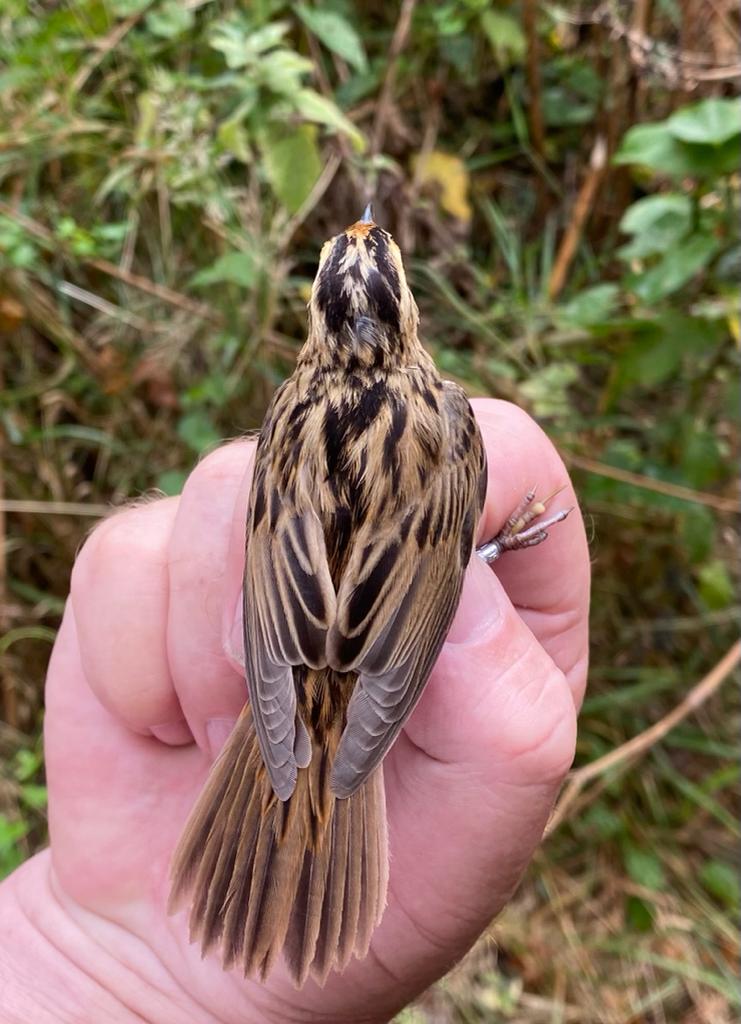
Bird of the month candidate for the lucky few was a stunning Aquatic Warbler trapped in the nets at Nanjizal on the 15th. In line with several national records this month, it was only time before one was found in Cornwall. 

Aquatic is indeed a prize find. The last record was also at Nanjizal: 1CY trapped 7th Sept 2019; then another 1CY trapped by E. Inzani, processed by Pete Rosevear 29th Aug 2018.  Before that, a 1CY photographed in the field on the Lizard 3rd October 2015 (T Blunden).  The last record from Marazion was way back on August 12th 2012 (also trapped).   Marazion Marsh was once THE place to find Aquatics but has since been knocked off the perch.  No less than six recent records have come from the nets at Nanjizal.


1CY Aquatic Warbler, 6th for Nanjizal, all pictures courtesy Reuben Veal.

Seawatching started a new phase on the 14th with a Wilson's Petrel and adult Sabine's Gull off Pendeen. 42 Storm Petrels were seen here in the evening. Another adult Sabine's Gull was seen on the 15th along with a flurry of Arctic and Common Terns. 120 Storm Petrels were also counted. A Black Tern, one Cory's and one Great Shearwater were seen off Porthgwarra on the 16th.

The wind shifted to North and up to 30mph on the 17th. Two Wilson's Petrels was seen with 89 Euro Stormies off Pendeen, plus another Sabine's Gull.

Events changed for the better on the 18th.  The south coast was the place to be. Sea temperature graphics for the period showed a warmer belt of water stretching from West Africa to the south west approaches. Predictably a Desertas/Fea's type Petrel was seen off Porthgwarra, and it or another was seen later in the afternoon here.  If that wasn't enough, two Wilson's Petrels were seen.  The start of a decent passage of large shear's included 26 Cory's and 50 Greats.  Lizard Point scored with four Great Shearwaters.

Adult Wilson's Petrel, Falmouth Bay, Picture by Jon Irvine.

A Wilson's Petrel lingered off Porthgwarra on the 19th and 20th, whilst four more Wilson's were seen well and photographed from the AK pelagic out of Falmouth. The Desertas/Fea's Petrel was seen again on the 20th late afternoon, prompting a large twitch the following day.  Those assembled early enough were treated to close views of the Pterodroma. More memorable was the tussle with an Arctic Skua for a couple minutes.  Six Wilson's Petrels, 389 Great Shearwaters, 156 Balearics and 46 Sooty Shearwater completed a stunning day.  At least ten Wilson's Petrel were counted off Southerly Point, Lizard, but interestingly, less than a handful of large Shears were seen. Finally, a single Wilson's was seen off Pendeen, completing a record haul of at least 17 birds from mainland Cornwall.

Desertas /Fea's type Petrel, Pothgwarra, Aug 2022, picture by Nigel Rogers.

A juv Long-tailed Skua was seen off Rame Head and possibly the same bird seen later off the Lizard (21st).

Almost unnoticed among the seawatching hysteria was a Red-backed Shrike at Caerthillian, Wryneck at Nanjizal and a secretive Melodious Warbler at Kenidjack.

Rare seabirds continued to be seen on Monday 22nd.  The Desertas/Fea's Petrel was seen off the Scillonian near Land's End and a high count of 151 Cory's Shearwater passed Porthgwarra.  Three Wilson's Petrel were seen from the ever-productive AK Wildlife pelagic in Falmouth Bay. 

94 Balearics were counted off Downderry on the 23rd. South East Cornwall is a productive area for this species, indicating that Balearic Shearwater enters the Channel further east than the large shears.  Finally, a single Wilson's was seen off St Agnes Head on the 23rd, rounding off an incredible period for rare seabirds.

The start of a notable passage of Black Terns began on the 24th with a single off Pendeen.  Three were seen off Newquay on the 26th and an impressive 20 in four flocks off Pendeen.  This species has become scarce in recent years, prompting the Society rarities committee to consider requesting descriptions.

A Sabine's Gull, four Grey Phalaropes, 22 Cory's Shearwaters and a Little Tern were seen off Pendeen on the 25th. The little Tern Spent some time feeding near the Three Stone Oare.

A Melodious Warbler was trapped at Nanjizal on the 26th. It had a fat score of 6 indicating that it had been feeding well locally. This bird could conceivably be the recent Kenidjack bird relocating. The First Little Stint of the year appeared at Drift.  A Little Tern found at Hayle Estuary later relocated to Porthkidney.

Two Dotterels were observed near Windmill Farm on the 28th and two juv Pectoral Sandpipers were found at Siblyback Lake.  A third Dotterel was flying around the Land's End area. A healthy seven Curlew Sandpipers at Hayle and a Temminck's Stint at Maer Lake rounded off a notable arrival of waders.

An Ortolan Bunting was found on private land near Skewjack on the 28th and a mini arrival of Wrynecks were also found in West Penwith. The top prize came on the 29th when a stunning first winter Paddyfield Warbler was pulled out of the Nanjizal net. What a fantastic time Nanjizal is having!  Continuing with the run of rare passerines, a juv Woodchat was found at Carn Owles and considered to be the badius (Balearic) form.

A Little Tern appeared at Drift Res, an unusual location for this species on the 30th.  Two Spoonbills appeared at Hayle Estuary and the Gannel Estuary.

First winter Paddyfield Warbler, Nanjizal, Aug 2022, picture courtesy Reuben Veal and Kester Wilson.

In summary, August was an exciting month with some fantastic seawatching, rare waders and a sprinkling of rare passerines.

Bird of the Month: Fea's / Desertas type Petrel seen several times at Porthgwarra delighting scores of birders.

Runners up: Paddyfield Warbler and Aquatic Warbler at Nanjizal, Caspian Tern off the Lizard.

Monday, 4 July 2022

Madeira WindBirds seabirding trip report 25th-28th June 2022

The following is a trip report from a visit to Madeira in June 2022. 

A group of six birders from West Cornwall booked three days with the well known Madeira Windbirds tours and an additional day-tripper sailing to Desertas Island. Windbirds always depart Machico harbour at 3pm and the Bonita da Madeira departs Funchal at 9am. 

We spent seven days in Madeira but this amount of time is unnecessary if its just seabirds you're after. Away from the coast, there's limited birdlife and all of it can be mopped up in a single morning. Any future trips would be for five days maximum.

Windbirds is a professional company specialising in watching seabirds and cetaceans. Hugo and Catarina set up the company18 years ago with a ten-seater, 11 metre rib. Two powerful outboard motors get you 25 miles offshore in approx. 90 mins. The team have exact coordinates of the best places to bird.  

You need full waterproof kit including leggings.  Essentially, you are going to get soaking wet, especially on the South side return leg or when you bird the North of the island on the outward leg. There's no formulae on which side to sit. If its windy, you'll get wet.  I wore deck shoes but a pair of crocks or old sandels is fine. (Your feet will also get wet). A wet bag is also essential for your kit.

Windbirds use a tried and tested method of chumming from a floating bucket of diced fish, laced with fish oil. The bucket is re filled several times during the five hour session.  The rib remains alongside the bucket throughout and never leaves the chum slick. The chum slick is created and pretty soon, the petrels and shearwaters arrive.

Bonita da Madeira is a large day tripper boat specialising in trips to Desertas Grande. The captain will pursue cetaceans or seabirds of interest but keep a respectful distance. The ship lands passengers on Desertas Grande island with a useful and knowledgeable guide to the island's wildlife. We were shown Bulwer's and Cory's breeding burrows. We also saw 12 Desertas Petrels and hundreds of Cory's on the voyage over to the island.  For 80 euros, its well worth it. A free cooked meal and wine is also offered. Well recommended.

The following species accounts give some idea of what can be seen:

Desertas Petrel. Over the four days at sea ie. 25th, 26th, 27th and 28th June, we saw 12, 4, 4, 6 birds respectively. Some views were distant and others reasonably close to the boat.  The name Pterodroma is Greek for Wind Bird, and as the name suggests, these birds thrive in high winds and power through the chum slick at impressive speeds. Some circle round the chum bucket but generally move on quickly. You have to be quick off the mark with id. and any photography.  The species breeds on Bugio Island, which is one of the three Desertas islands (adjacent to Desertas Grande).

Desertas Petrel, June 2022 (picture courtesy P Clement)

Desertas Petrel, June 2022, picture by Steve Rogers

Zino's Petrel: Over the four days at sea ie. 25th, 26th, 27th and 28th June, we saw 0, 2, 3, 2 birds respectively and had some really good close views. This species is the number one target for visiting birders. Up to date information from birders at the breeding site on the Madeiran mountain estimate around 80 breeding pairs and a total of just 300 birds. Thus, this species is super rare and extremely vulnerable, especially to feral cats and rodents on the mountain where it breeds.

We visited the mountain breeding site at midnight to listen to them calling. Whilst the conditions of rain, mist and strong wind weren't ideal, we did hear the mournful sounds coming from the burrows. The visit is organised by Hugo and Catarina. (50 Euros.)

Zino's Petrel, June 2022, picture by S Rogers

Zino's Petrel, June 2022, picture by P Clement

Bulwer's Petrel: Over the four days at sea ie. 25th, 26th, 27th and 28th June, we saw hundreds daily. The species breeds locally on Desertas Island and becomes easier further out in deeper water. Bulwer's visits the chum bucket  and affords close views. That said, its a very tricky bird to photo. Its crazed flight at super speed means only the best modern cameras keep up with it. I took about 500 shots of Bulwer's and just a dozen were acceptable. We were shown a nest site on Desertas in a stone wall with a bird sitting on the nest.

Bulwer's Petrel, the only photo showing a wedge shaped tail, image by M Ahmad.


Bulwer's Petrel, June 2022, pic by Steve Rogers.

Bulwer's Petrel, June 2022, pic by Steve Rogers.

Madeiran Storm Petrel: This species is a prime target and despite local breeding, is surprisingly difficult to connect with. We saw just two birds on the last day. Both visited the chum slick, one staying for 20 minutes giving stunning views. Bob Flood from Scilly Pelagics also saw one the following week. This species was a key target for us as there are a couple Cornwall records. We wanted to familiarise ourselves just in case one flies past Pendeen! 

Windbirds' skill and experience in approaching this species at the chum bucket was perfect, manoeuvring the rib perfectly to obtain the best views.

MADEIRAN Petrel(Image by Marcus Nash).

Madeiran Petrel (image by Steve Rogers).
Madeiran Storm Petrels, lower left by Marcus Nash, rest by Steve Rogers, June 2022.

European Storm Petrel: Just one was seen on day 2.

Wilson's Storm Petrel: One adult in moult was seen on day 3. It visited the chum bucket and regularly worked the chum slick for a 30 minutes affording excellent views, sometimes close.


Wilson's Petrel, June 2022, pictures by Steve Rogers.

Cory's Shearwater: The second commonest seabird behind Bulwer's Petrel. Large rafts of scores and occasionally hundreds of birds seen. There were more on the northern pelagic return leg. Perhaps a couple thousand near the narrow channel linking north and south of the island. This was the largest concentration we saw.  Visits to the chum bucket gave stunning close views.


Cory's Shearwater pictures, June 2022, Madeira, by Steve Rogers.

Manx Shearwater: No more than ten birds seen over the four days. The species is suspected of breeding on Madeira but as yet unproven. Regular summer records suggest otherwise.

Little Shearwater: None seen on our trips but Niall Keogh found one on a ferry trip from Madeira to Porto Santo. One was also seen well from the Windbirds pelagic the following week. Little Shearwater is a prize find and is not guaranteed.

White-faced Storm Petrel: None seen.

Rock Sparrow: One pair seen on the walk to the east end of the island, about 1k from the turning circle car parking area. Berthelot's Pipit and Canary also seen here.

Rock Sparrow, nr Calical, Madeira June 2022, picture by Steve Rogers.

Trocaz Pigeon: We saw a few at Palheiro Gardens north of Funchal and singles dotted around the vast mountain forests.  Madeiran Firecrest was also seen and heard here.

Peregrine Falcon: We saw two on the coast at Machico. Apparently this species is rare here. Hugo and Catarina stopped the rib to photo it. We also saw the occasional Sparrowhawk, Common Buzzard and Kestrels. A moribund House Martin found on the Desertas Grande shoreline was unusual.

In summary, this is a relatively easy place to fly to, fairly cheap living and easily accessible with a hire car. Depending on your culinary and drinking habits, the total trip cost from door to door shouldn't cost more than about £1200. Well worth it.


Saturday, 29 July 2017

Seabird bonanza in the west country

The weather over the last two weeks has been very favourable.  That is to birders.  Seabird enthusiasts to be exact.  July is fast becoming a very important month in the birding calendar for finding rare seabirds in the south west.  Cornwall, Devon and even Dorset have been rewarded with some exceptional sightings.   I say "even Dorset" as this county is not renowned for rare seabird sightings, but a Great Shearwater normally seen off Cornwall and Devon coasts, gave stunningly close views off Portland on the 26th.  Many experienced Dorset birders had not previously seen this bird in their county.

The highlight for Devon was the county's 5th Fea's Petrel, video'd off Berry Head, South Devon on the 11th July.  This species breeds in the eastern Atlantic islands and just a handful of birds are seen annually, usually off Cornwall, Scilly or south west Ireland.

Off Scilly, the famous summer pelagic boat trips on the Sapphire boat have logged several rare Wilson's Petrels, most offering close views.  On 27th an incredible 20  were logged.  Cornwall has had its fair share of rarities though with six sightings of Wilson's Petrel (three from pelagics out of Penzance), the others from the Lizard and Porthgwarra.  The Lizard scored well on the 21st July with 296 Cory’s Shearwater, 66 Great Shearwater, 9 Sooty Shearwater, 1 Balearic Shearwater, 1 Long-tailed Skua, 1 Pomarine Skua, 6 Great Skua, 2 Arctic Skua, 109 Storm Petrel, 1 Wilson’s Petrel and 1 Sabine’s Gull.

Arguably, the best day was Saturday 22nd July when a strong candidate for Scopoli's Shearwater was seen off Porthgwarra.  If accepted, this would be the first record for Cornwall.  Depending on who you talk to, Scopoli's has not been granted its own status, rather a sub species of Cory's Shearwater.  The small size, different underwing plumage and geographically distant breeding populations will surely see a status change soon.  A large all dark petrel was seen by one lucky observer later in the day from the same site. 

Looking forward, August is equally a great month for seabirds and all eyes will be on weather forecasts for those big Atlantic low pressures.  We will also start to see the southerly movement of waders as they move out of their Arctic breeding grounds.  All in all, a busy time ahead.
Record shot of Wilson's Petrel, one of two seen off Penzance on a pelagic

Great Shearwater off Penzance, July 2017

Storm Petrel off Penzance, July 2017

Saturday, 1 August 2009

St Ives Pelagic on the HMS Freestone

This dedicated seabird pelagic was the first to be organised for several years from mainland Cornwall. The main intention was to see Wilson's Petrel off St Ives. Twelve of us sailed for about seven miles today from 5am and eventually found a likely spot. We chummed immediately with a mackerel mixture and within 30 minutes, about 40 Storm Petrels and 2 Wilson's Petrels appeared on the slick, all giving fairly close views. However, there was a decent swell and given the small size of the boat, there was some considerable difficulty in obtaining respectable shots. I did manage to photo the Wilson's Petrel but sadly only one shot of mine was barely publishable. Two shots taken by Thor Veen are also shown below.

Fulmars were the first birds on the scene and they approached the boat to within ten feet. Despite the close distance, the movement of the boat made photography and general viewing surprisingly difficult. The picture below shows a Fulmar virtually looking into the boat at point blank distance.


Wilson's Petrel: The image above and below was taken by Thor Veen on this Pelagic.

The image below is the only publishable shot of the Wilson's Petrel I could manage. The long wings and pale carpal bar as well as a barely noticeable leg projection can just be seen.

Several Common Terns investigated us but flew on. The bird below was about 20 feet above us.


The petrel images below are all Sorm Petrels. These tiny little ocean wanderers fly remarkably quickly and it takes a lot of practice keeping them in the view finder, let alone maintaining sharp focus. Of the 500+ shots I took, approx ten were in focus and just five worth publishing here.

The combination of vibration of the boat's engine, massive heaving and movement of the boat, hand-held camera shake and of course fast flight of the bird all combined to make sea bird photography quite tricky.


I quite like the shot below. It's a bit "arty" but the miniature petrel set against the awesome size of the sea swell and bird's shadow make this image one of my favourites of the day.


The good ship Freestone below.

Paul Freestone and Mark Halliday above looking sea sick but content at the end of today's Pelagic.

For those of you interested in the logistics of this trip, Paul Freestone of Cornwall-Birding.co.uk organised the trip as a one-off event simply to see Wilson's Petrel off the Cornish coast. The tongue-in-cheek vessel was in fact a slightly larger fishing boat with a standing room for twelve people. We sailed from St Ives harbour at 5am and returned at 11am, costing £35 each. Chum mix was organised by ourselves.


For anyone wishing to organise a trip from outside the county, I would say the chum is the more difficult part to organise. In addition you require a chummer. Royston attempted chumming on this trip and was sea-sick, as was I simply standing by the putrid stuff. The guys on the Scillies do a fantastic job but have been finetuning the art for some years, so don't expect to be a skilled tradesman in a day!